
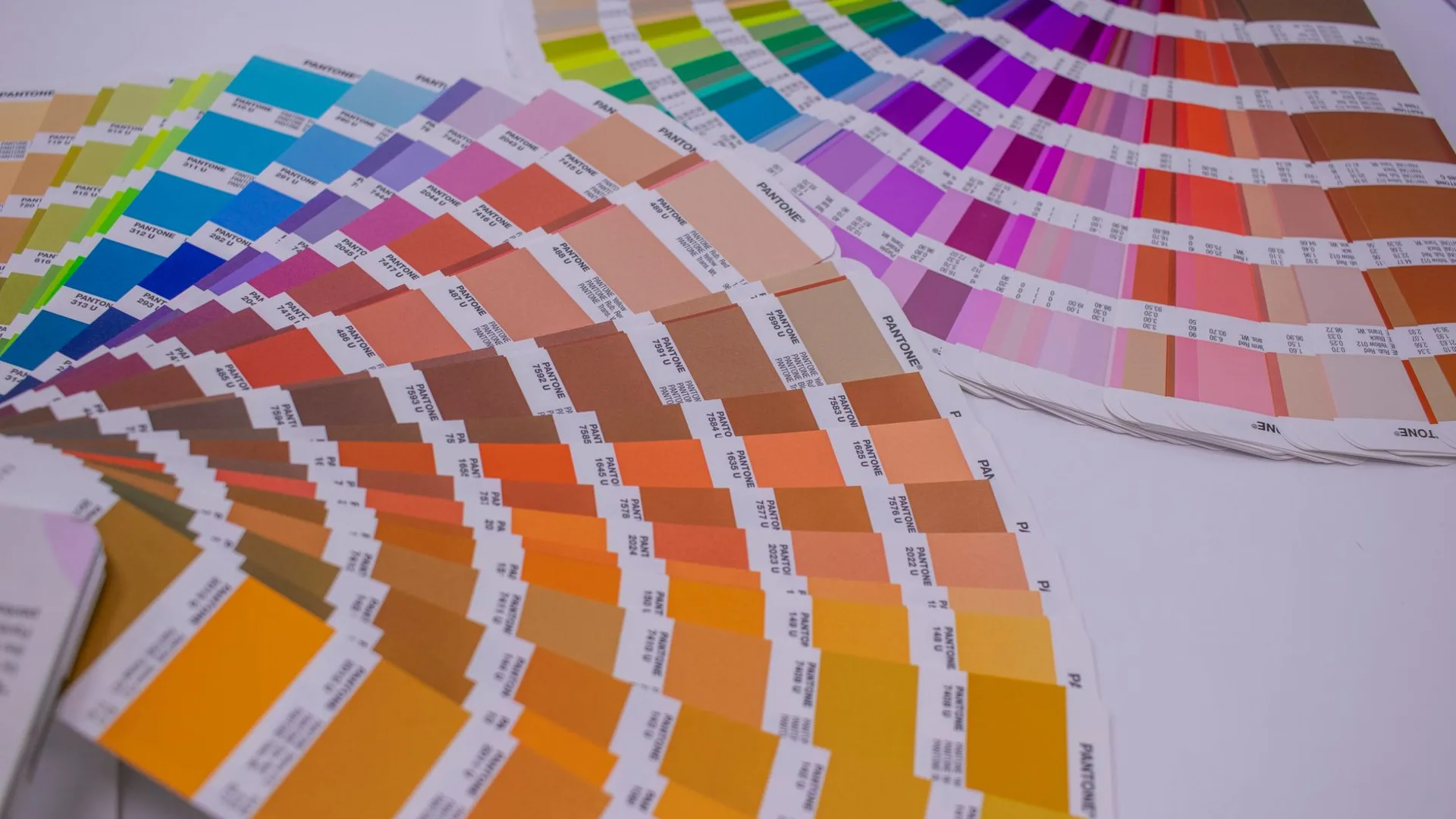
DMC Thread Conversion Chart
Nearly every chart you buy is written in DMC numbers. DMC is the de facto standard, and its shade codes are the reference designers reach for. That is fine until the shop is out of stock, or you already own a full set of something else, or you live somewhere another brand is simply easier to buy.
Conversion is straightforward in principle and slightly treacherous in practice.
Why conversions are approximate
Every manufacturer dyes to their own recipes. There is no committee agreeing that this particular blue is the same across brands, so a conversion chart is somebody's judgement about which shade is closest.
That means:
- Most conversions are very good. For the majority of shades, the substitute is close enough that nobody would notice.
- Some are compromises. Particularly in ranges where one brand has more shades than another, several DMC numbers may map to the same Anchor number.
- A few are poor. Very saturated colours and subtle neutrals are where conversions most often disappoint.
The practical consequence: converting one or two colours in a design is low risk. Converting an entire subtly-shaded portrait is where you notice, because the relationships between neighbouring shades matter more than any single colour.
The brands you will meet
| Brand | Notes |
|---|---|
| DMC | The reference standard. Six-strand cotton, widely stocked, the numbering most charts use |
| Anchor | The other long-established name. Very widely converted, different numbering entirely |
| Madeira | Good quality, common in Europe, its own numbering |
| Cosmo | Made by Lecien, well regarded for its finish and consistency |
| CXC | Widely available and inexpensive, numbered to shadow DMC closely |
| Sullivans | Also numbered to track DMC, common in kits |
| J&P Coats | Made by Coats & Clark, widely stocked in US general craft shops, its own numbering |
| Presencia | Spanish, sold as Finca mouline, long-staple Egyptian cotton with its own numbering |
| Ariadna | Polish, from one of Europe's largest thread makers, its own numbering |
| Gamma | Russian, the widest shade range of any brand here, its own numbering |
| Luca-S | Belarusian, Egyptian cotton, its own numbering and common in kits |
| PNK Kirov | Russian, from St Petersburg, a large range with its own numbering |
| Unitas | Croatian, sold as Ljubica, its own numbering that happens to reuse many DMC numbers for different colours |
| Dimensions | The floss in Dimensions kits, its own numbering |
CXC and Sullivans are worth understanding because they deliberately mirror DMC numbering. That makes substitution unusually painless, though the dye is not identical and a side by side comparison will show a difference in some shades.
There is more on the character of each in our guide to cross stitch thread brands.
How to substitute without regretting it
Convert the whole palette, not one colour. If you swap a single shade in a design where colours blend into each other, it can sit oddly against its neighbours even though it is a good match for the original in isolation. Converting the whole set keeps the relationships intact.
Check the awkward ones in daylight. Whites, creams, blacks and greys are where a small difference shows most. If you can compare physically before committing, do it, and do it in natural light rather than under a shop's lighting.
Buy enough of the dominant colours at once. Dye lots vary within a brand as well as between brands. Running out of a background shade halfway through and buying a fresh skein is a more common cause of visible banding than brand substitution ever is.
Keep a note of what you substituted. If you come back to the piece in six months, or stitch a companion piece, you will want to know.
Where gaps bite
The frustration with published conversion charts is that they are often incomplete. A chart will cover the common shades and then leave blanks, usually in exactly the ranges you needed. You end up cross-referencing two or three different tables and guessing.
This is worth checking in whatever tool you use. A conversion set where every colour has an equivalent in every supported brand is far more useful than a longer list of brands with holes throughout it. In HobbyTub every colour in the palette carries a code for every supported brand, so switching a project from DMC to Anchor does not leave you with unmatched shades to solve by hand.
Converting a whole project
If you are working from a chart in one brand and stitching in another, the tidy approach is to convert once, at the start, and work from the converted palette.
In a project you can set your thread make and have the whole legend read in those numbers, rather than mentally translating every time you pick up a new colour. You can also override individual colours where you disagree with the match, or where you want to use something you already own. That last case is more common than people admit: substituting from stash is one of the genuine pleasures of a well-stocked thread box, and it is much easier when the software suggests the nearest match rather than making you hunt for it.
Once you have a palette you are happy with, organising your threads properly will save you far more time than the conversion did.
A sensible rule of thumb
Convert freely for blocks of solid colour, seasonal pieces and anything where the exact shade is not the point. Be careful with portraits, subtle shading and pieces you intend to be heirlooms, where relationships between neighbouring shades carry the work.
And whichever brand you settle on, buy the whole palette from one place at one time if you can. Consistency within the piece matters more than which manufacturer's cotton it came from.
You can browse the pattern library to see the palette of a design before you buy thread, or see all the tools for converting and tracking a project.