
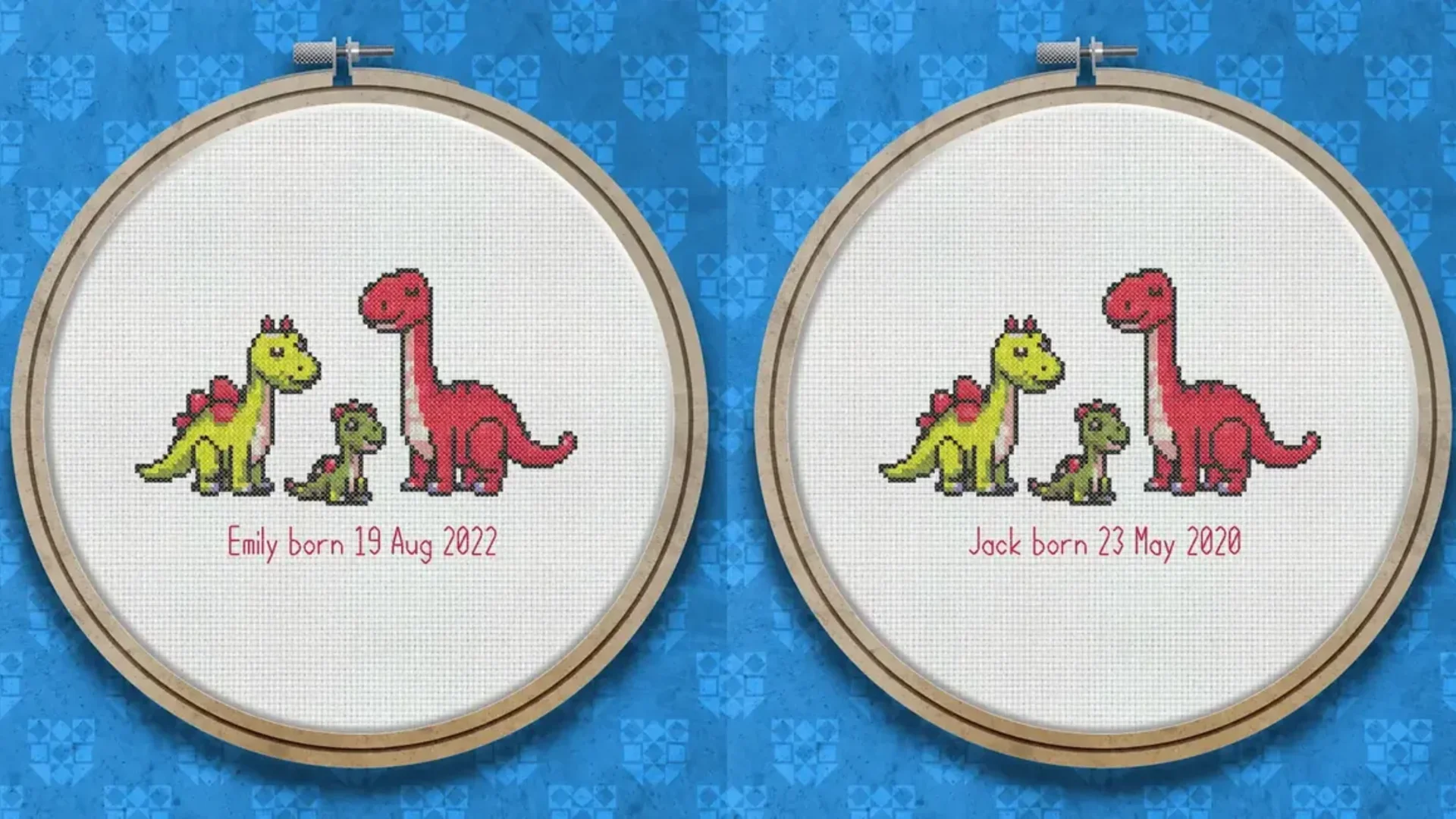
How to Cross Stitch Names and Dates on a Personalised Piece
A name and a date are what turn a nice piece of stitching into something a family keeps. A birth sampler, a wedding hoop, a house sign, a gift for someone retiring. The design around them can be almost anything. The words are the part people read first, and the part they notice if it is wrong.
None of it is difficult. Most of what goes wrong with personalised pieces comes from starting to stitch before the words have been charted and measured.
Decide what the words are doing
Before choosing an alphabet, decide whether the text is the headline or the caption.
A name that is the point of the piece wants weight. Filled cross stitch letters, a size that holds its own against the motifs around it, and a clear space of its own.
A date, a time or a short message underneath is supporting detail. It reads best smaller and lighter, which usually means backstitch, so it sits quietly under the main design rather than competing with it.
Plenty of good pieces do both: a filled name, with the date in backstitch below. If you are unsure, cross stitch alphabets and lettering goes through the difference in more detail.
Chart the words first
Type the name into the free cross stitch text generator before you thread a needle. You see it charted straight away, in filled or backstitch letters, with its width and height in stitches and the size it comes out on 14 count aida.
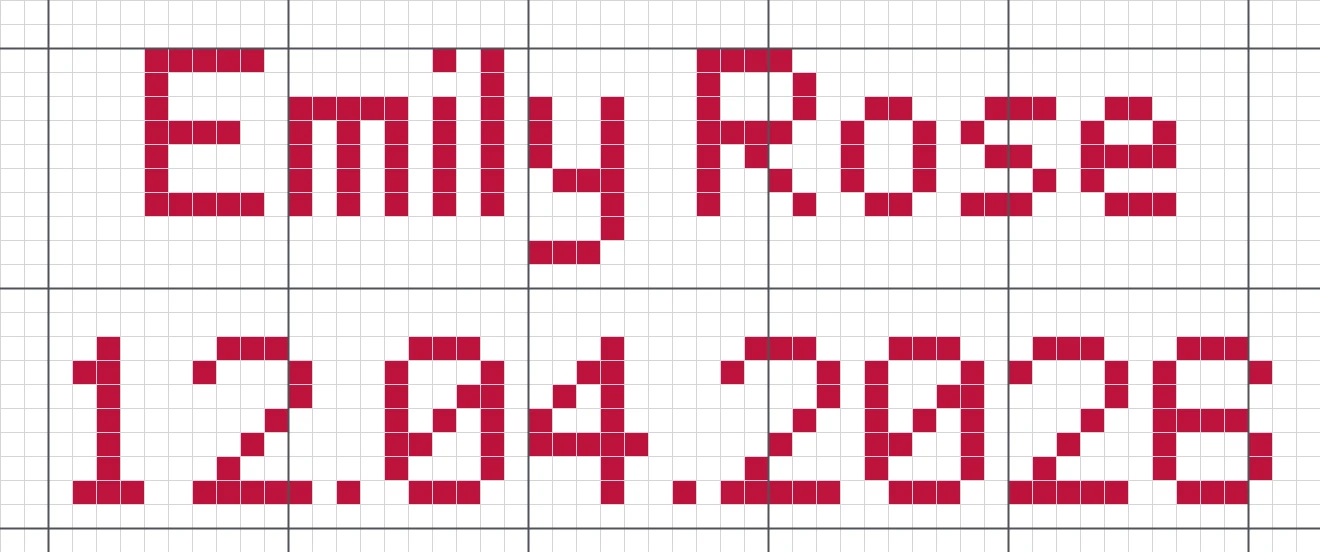
That chart is 51 stitches wide and 19 tall, which is about 3.6 by 1.4 inches on 14 count. Knowing that before you start is the difference between a name that sits comfortably in its space and one that runs into the border two letters from the end. For other fabric counts, the fabric calculator does the sum.
If you would rather copy letters by hand, the alphabet charts show every letter and number at each size.
Choose a size that suits the piece
The height in stitches divided by the fabric count gives the height in inches. Some useful reference points on 14 count:
- 7 stitches tall is half an inch. A good size for a name on a hoop or a small sampler, and the smallest filled alphabet with proper lowercase.
- 4 to 5 stitches tall is about a third of an inch. Capitals only in filled letters, which suits initials and short words.
- 3 to 5 stitches tall in backstitch stays readable, and is where most dates and small messages sit.
Match the lettering to the motifs around it. A name much taller than the design overpowers it, and one much smaller looks like an afterthought.
Write the date so it fits
Dates take up more room than people expect, and the format you choose changes the width a great deal.
- 12.04.2026 is compact and tidy, and works well in a single line under a name.
- 12 April 2026 reads more warmly but runs a fifth to a third wider, depending on the alphabet.
- April 2026 or just 2026 is often enough for a house or an anniversary.
Write it the way the person receiving it would. Day first is usual in the UK, month first in the US, and a birth date written the wrong way round is not a mistake anyone wants framed.
Fitting a name into an existing design
Most personalised pieces start from a design with a space left for the words. A few things make that go smoothly:
- Measure the space in stitches and compare it with the chart of your name. Leave at least two or three empty stitches either side, or the name will look squeezed.
- Centre the name on the space, not the fabric. If the motif sits slightly off centre, the words should follow the motif. Centring and spacing text walks through the counting.
- A long name has options. Drop a size, switch to backstitch, or split it over two lines with the first name above the surname.
- Think about what sits underneath. Lowercase g, j, p, q and y drop below the line, so leave room for them before the date or the border.
The pieces people make most
- Birth samplers: a name, a date, and often the weight and time. The name in filled letters, the details in backstitch underneath.
- Weddings: two names and a date. An ampersand or a small heart between the names keeps them on one line.
- House signs: a name or a number, and sometimes the year the family moved in.
- Gifts and milestones: retirements, graduations, anniversaries. Short words and a year usually say enough.
There are more ideas in wedding and baby cross stitch keepsakes and cross stitch gift ideas.
Check the spelling before you stitch
The most common personalisation mistake is not a stitching one. It is a name spelled the way you assumed rather than the way the family spells it, or a date one day out. Check both with someone who knows before you start. Unpicking a finished name is a long evening.
Making the next one quicker
If you make the same design for more than one person, put the text on the pattern itself in the pattern editor rather than charting it separately. There it stays editable, so the next baby, the next couple or the next house is a change of wording rather than a new chart, and the stitch count and thread list update with it.