
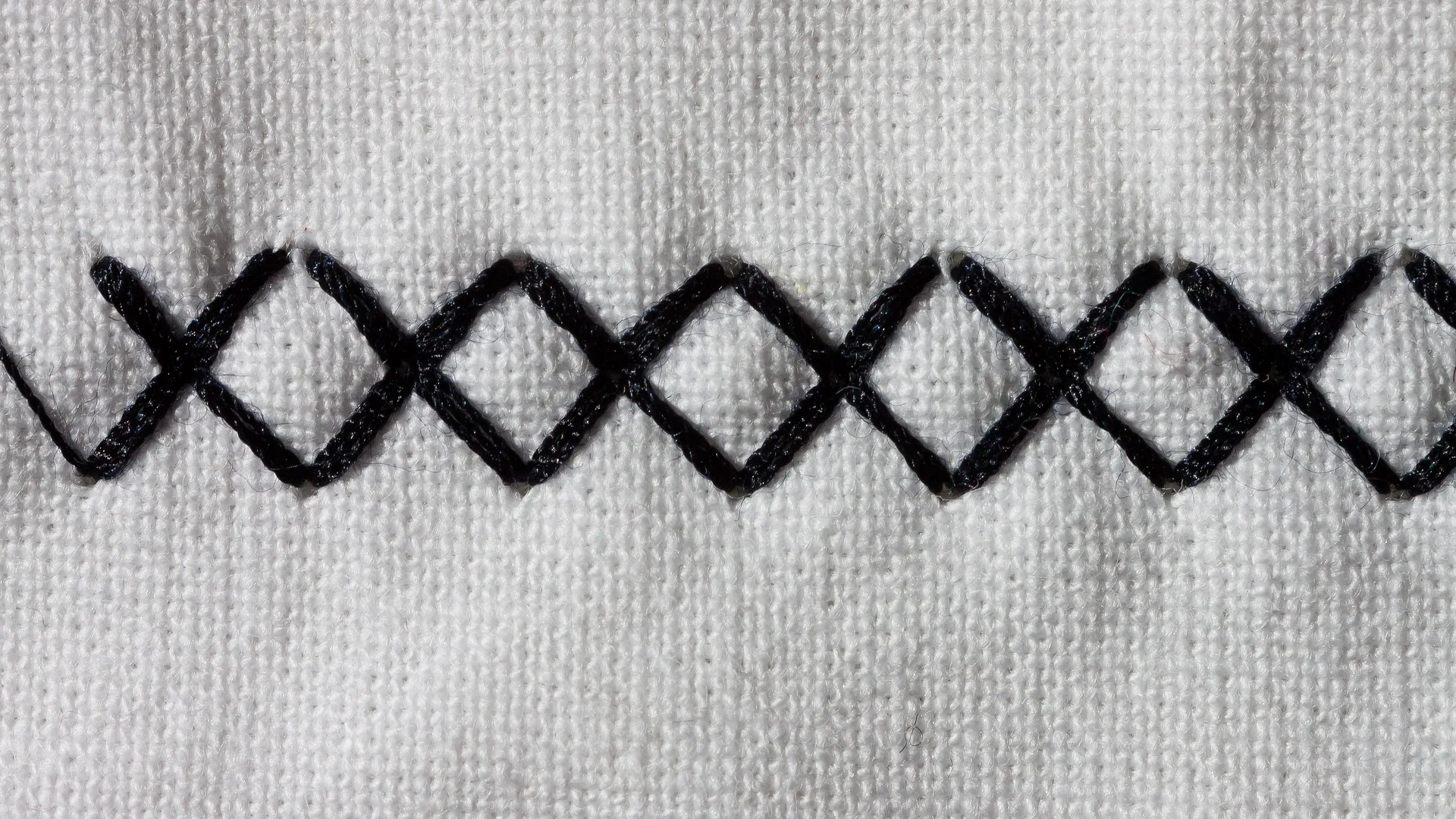
Fractional Stitches Explained: Half, Quarter and Three-Quarter
A full cross stitch is a little square X, and squares are wonderful for straight lines and solid blocks of colour. The trouble is that faces, petals, letters and landscapes are full of curves. Fractional stitches are how a pattern rounds off those hard edges and adds fine detail. Here is what each one is and how to work it.
Why fractional stitches exist
Imagine stitching a circle using only full squares. The edge would look like a staircase. Fractional stitches let you fill part of a square instead of the whole thing, so a curve can taper smoothly instead of stepping. They are used sparingly, usually around outlines and detailed areas, but they make a real difference to how polished a finished piece looks.
There are three you will meet constantly, the half stitch, the quarter stitch and the three-quarter stitch, and a fourth, the petite stitch, that turns up in finely detailed designs.
The half stitch
A full cross stitch is two diagonal lines forming an X. A half stitch is just one of those diagonals, a single line running corner to corner.
Half stitches are often used for gentle shading or faint background areas, where a full X would be too strong. Because there is only one diagonal, the fabric shows through more, giving a lighter effect.
On a chart, a half stitch is shown as a single diagonal line or a symbol sitting in half of the square.
The quarter stitch
A quarter stitch fills just one corner of a square. You bring the needle up in the corner and take it down in the very centre of the square, so the stitch is half the length of a normal diagonal.
Quarter stitches let a colour reach into a corner without filling the whole square. They are rarely used alone. More often they team up with a half stitch to make the next stitch on the list.
To find the centre of the square you sometimes need to pierce the fabric rather than use an existing hole. On Aida fabric this means pushing the needle through the middle of a block, which is easier with a slightly sharper needle.
The three-quarter stitch
The three-quarter stitch is the workhorse of curved designs. It combines a half stitch (one full diagonal) with a quarter stitch (a short diagonal into the centre). The result fills three quarters of the square and leaves one corner open.
This is what lets two different colours share a single square, each taking a three-quarter or quarter portion. That sharing is exactly how smooth diagonal edges and rounded shapes are built.
On a chart, a three-quarter stitch is shown as a symbol filling three quarters of the square, often with a second symbol in the remaining corner.
The petite stitch
A petite stitch, also called petit point, is a complete little cross worked in one quarter of a square. Where a quarter stitch is a fragment of a cross, a petite is a whole one at half the scale, so four of them fit in the space of one full stitch.
Petites are how a designer puts fine detail into a small area, an eye or a piece of lettering, without shrinking the whole design onto finer fabric. On a chart a square of petites is drawn as four smaller symbols in one cell, sometimes in four different colours.
They are worked over one thread of evenweave, or by piercing the middle of an Aida square, which is the same technique quarter stitches use.
Reading fractionals on a chart
Fractional stitches can be the fiddliest part of a chart to read, so take them slowly:
- Look at which corner the symbol sits in. That tells you where the stitch points.
- Check whether two symbols share one square. If so, each colour takes part of the square.
- Follow the outline. Fractionals almost always appear along the edges of shapes, not in the middle of solid blocks.
If you are still getting comfortable reading charts in general, our guide on how to read a cross stitch pattern covers the basics first.
Tips for stitching them neatly
- Use a slightly sharper needle if you find yourself piercing the fabric for quarter stitches often.
- Keep tension gentle. Fractionals sit close to the fabric holes and pucker easily if pulled tight.
- Do the shared square in one go. If two colours meet in a square, stitch both parts before moving on, so the centre hole lines up perfectly.
- Add backstitch last. A crisp outline hides small imperfections in the fractional stitches beneath it.
Seeing fractionals in your pattern
Because fractional stitches are precise, it helps to see exactly where each one falls before you start. A digital chart lets you zoom right in on a curved edge and see which corner every stitch belongs to.
This is also where a lot of software quietly lets you down. Converting a chart from one format to another often rounds every split square up into a whole one, which is why a design can come out of a converter looking blockier than the picture on the front of it, with nothing to tell you what was lost.

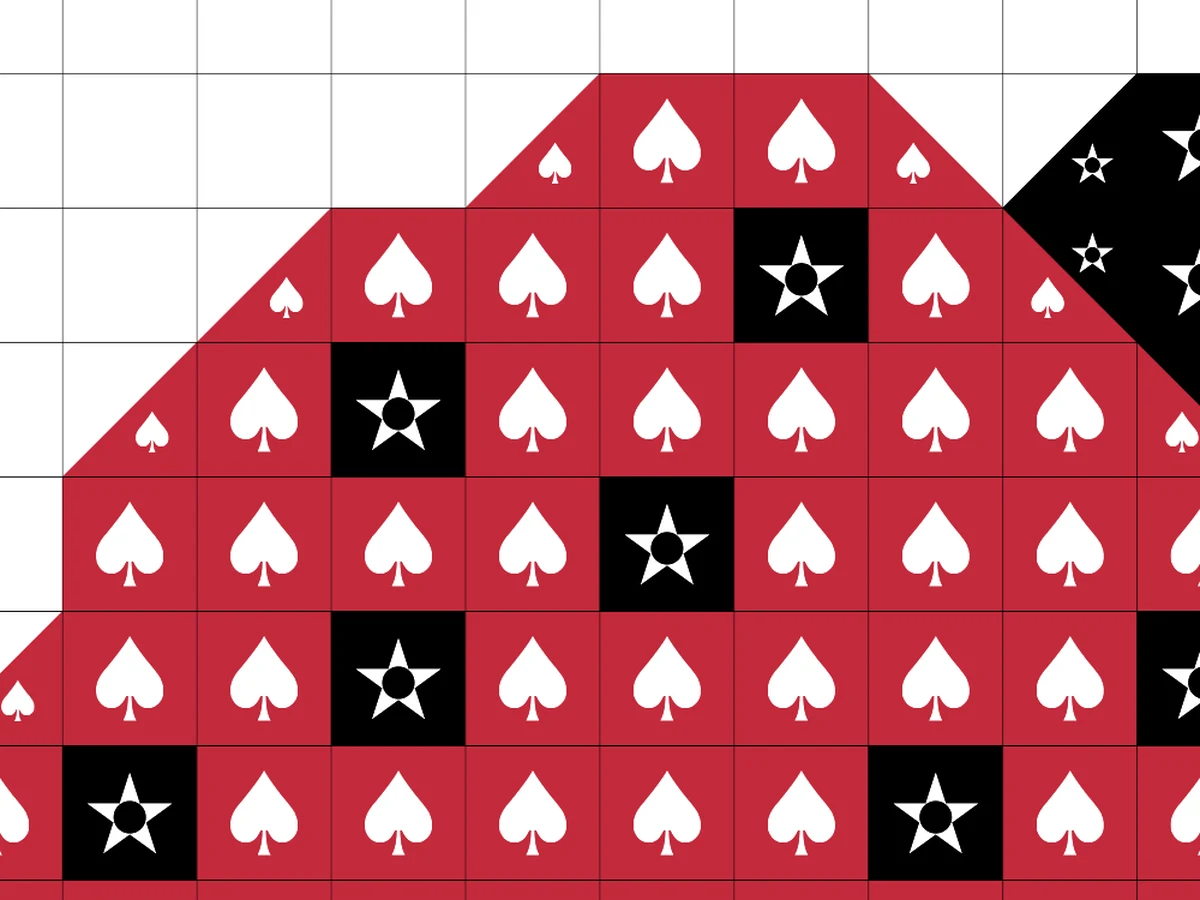
Those are the same few squares of the same chart, rounded up on the left and kept on the right. Notice where the damage lands. Rounding a split square up does not just coarsen the shape, it puts colour into a square the designer left partly bare, so the whole error falls on the outline.
HobbyTub keeps them. Half, quarter, three-quarter and petite stitches are drawn on screen as their real shapes, marked off individually as you stitch them so a square shared by two colours is two separate marks, and printed as themselves on a PDF chart. They also survive an import from a PCStitch .pat, a Pattern Maker .xsd, an OXS file or most chart PDFs, rather than being flattened on the way in.
Have a look through the pattern catalogue to see detailed designs that use them.
Fractional stitches feel awkward on your first attempt and natural by your third. Once they click, your curves will look smooth and your finished pieces noticeably more refined.