
How to Sell Cross Stitch Patterns
Most cross stitch designers started as stitchers who drew something they could not find anywhere else. Selling the chart is the natural next step, and it is one of the few ways to earn a little from the hobby. It is also a small business with its own expectations, and buyers notice quickly when a chart falls short of them.
This guide covers what a buyer expects to find in the file, how to be sure a design is yours to sell, and how to make sure your name stays on it.
What a buyer expects in the file
A downloadable chart is almost always a PDF. Whatever you design it in, the finished file should have:
- A cover with a picture of the finished piece, the design size in stitches, and the finished size on a stated fabric count
- A thread key with a symbol, a thread code and a colour name for every shade, in DMC at least, since that is the numbering most stitchers shop by
- How much thread each colour needs, or at least the stitch count per colour, so the buyer can shop before starting
- Chart pages that read in black and white, with symbols distinct enough that nobody confuses two shades on a mono printer
- Backstitch drawn as lines along the cell edges, and French knots and beads marked so they cannot be mistaken for stitches
- Numbered pages with overlap, so a large design tiled across several sheets lines up again
- Centre markers, because most stitchers start in the middle
There is more on the page layout side in printing cross stitch patterns.
Many buyers never print at all. They open the PDF in a markup app on a tablet and tick stitches off as they go, so a clean, sharp chart matters as much on screen as on paper. A chart exported from charting software, with a real grid and real symbols, works far better in those apps than a scan or a photograph of one.
Make sure it is yours to sell
This is the part that catches people out, and it is worth being strict with yourself about it.
A design you drew is yours. So is a chart converted from a photograph you took yourself.
A photograph or artwork you did not make is not. Converting someone else's image into a chart does not change who owns it, and selling the result is selling their work. The same goes for tracing or closely copying another designer's chart.
Characters and logos belong to someone. Cartoon characters, film stills, team crests and brand logos are all protected, and charts of them are among the listings most likely to be taken down.
Looking at other charts to learn how a designer handled a curve or a border is how everyone learns. The line is copying the design itself, and most cross stitch designers are one person selling small patterns, so it is a line worth holding. There is more on this in how to design your own cross stitch pattern.
Put your name on it
A chart gets passed around. A buyer prints it, a friend borrows the printout, a file is shared in a group. Wherever it ends up, it should still say who designed it.
- Your name or shop name on the cover, where a buyer looks first
- A copyright notice, such as "© 2026 Your Name". Your work is protected with or without one, but a notice tells everyone who to ask
- Your terms, in plain words. "For personal use only, please do not share or resell this chart" is the usual line. Say what you mean, and keep it short enough that people read it
- A link to your shop, so someone who finds the chart secondhand knows where to buy the next one
Test it before you list it
Stitch the design yourself, or at least a good part of it. Nothing finds a wrong symbol, a missing colour in the key or a pair of shades that look identical on the fabric faster than working it. Many designers also ask a friend or a test stitcher to work from the file exactly as a buyer would get it.
Print one page in black and white, too. If two symbols are hard to tell apart on paper, a buyer will find out halfway through a colour.
Photograph the stitched piece
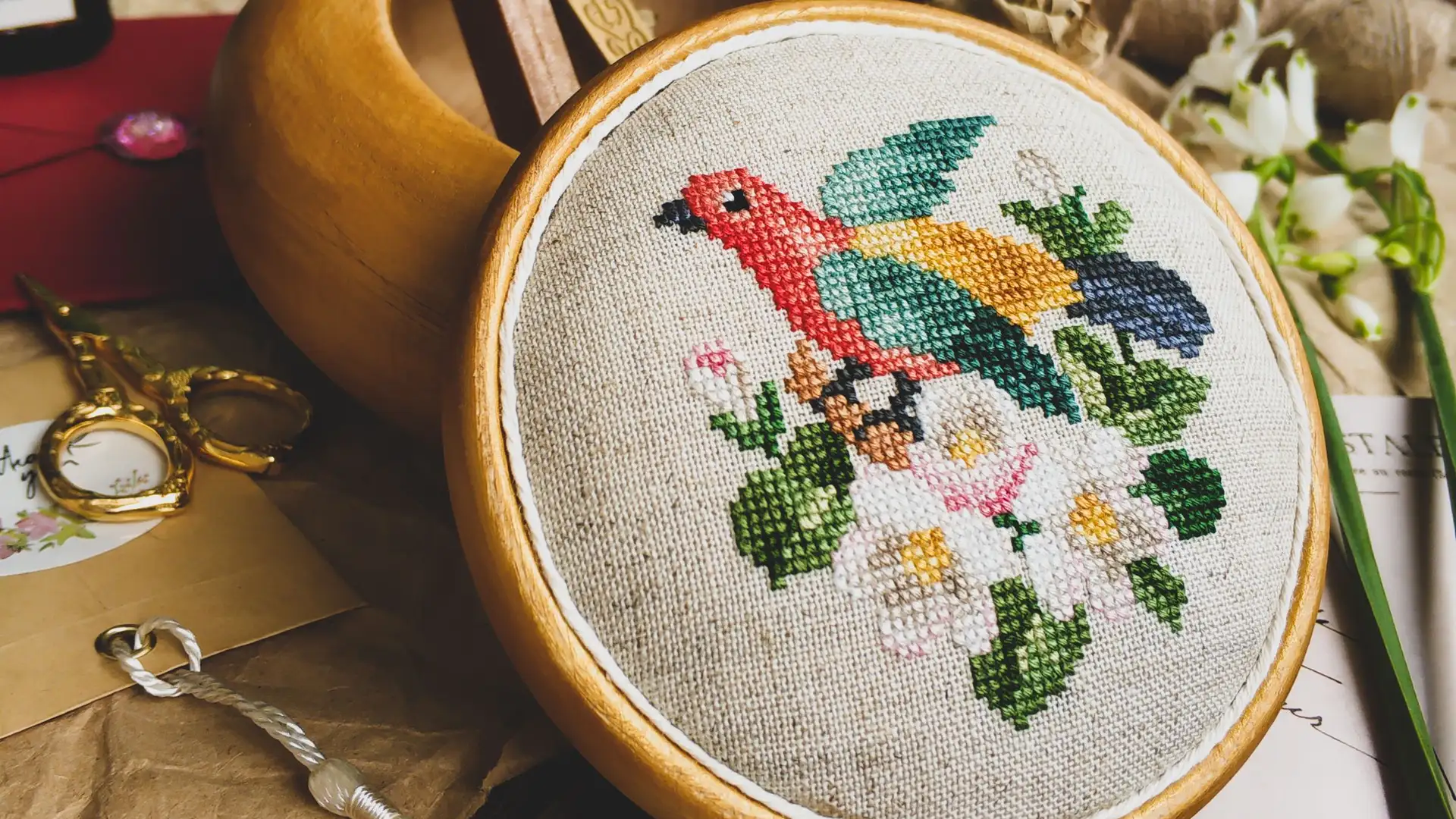
A photograph of the finished piece sells a chart far better than a digital preview does. Buyers want to see what it looks like in thread, on fabric, in a hoop or a frame. Good daylight and a plain background do most of the work.
Where to sell
Etsy is the largest marketplace for digital cross stitch charts, and the place most buyers search first. It handles the download for you, and the trade-off is fees on every sale and a lot of competition in the same search results.
Your own shop keeps more of each sale and lets you build a following, but you have to bring the visitors yourself. Several services will sell and deliver a digital file for you without needing a whole website.
Plenty of designers do both: a marketplace to be found, and their own shop or mailing list for the people who come back.
Where HobbyTub fits
HobbyTub is where you can design the chart in the first place, in the pattern editor or from your own photograph, and export it as a printable PDF or as an OXS file for other charting software.
With chart branding set up, every chart you export carries your name or logo across the top of the cover, your copyright notice and terms under the design, and your shop link at the foot of the page. The OXS file carries the same credit inside it, so the software a buyer opens it in shows who designed it. It is part of the subscription, with no separate designer plan.
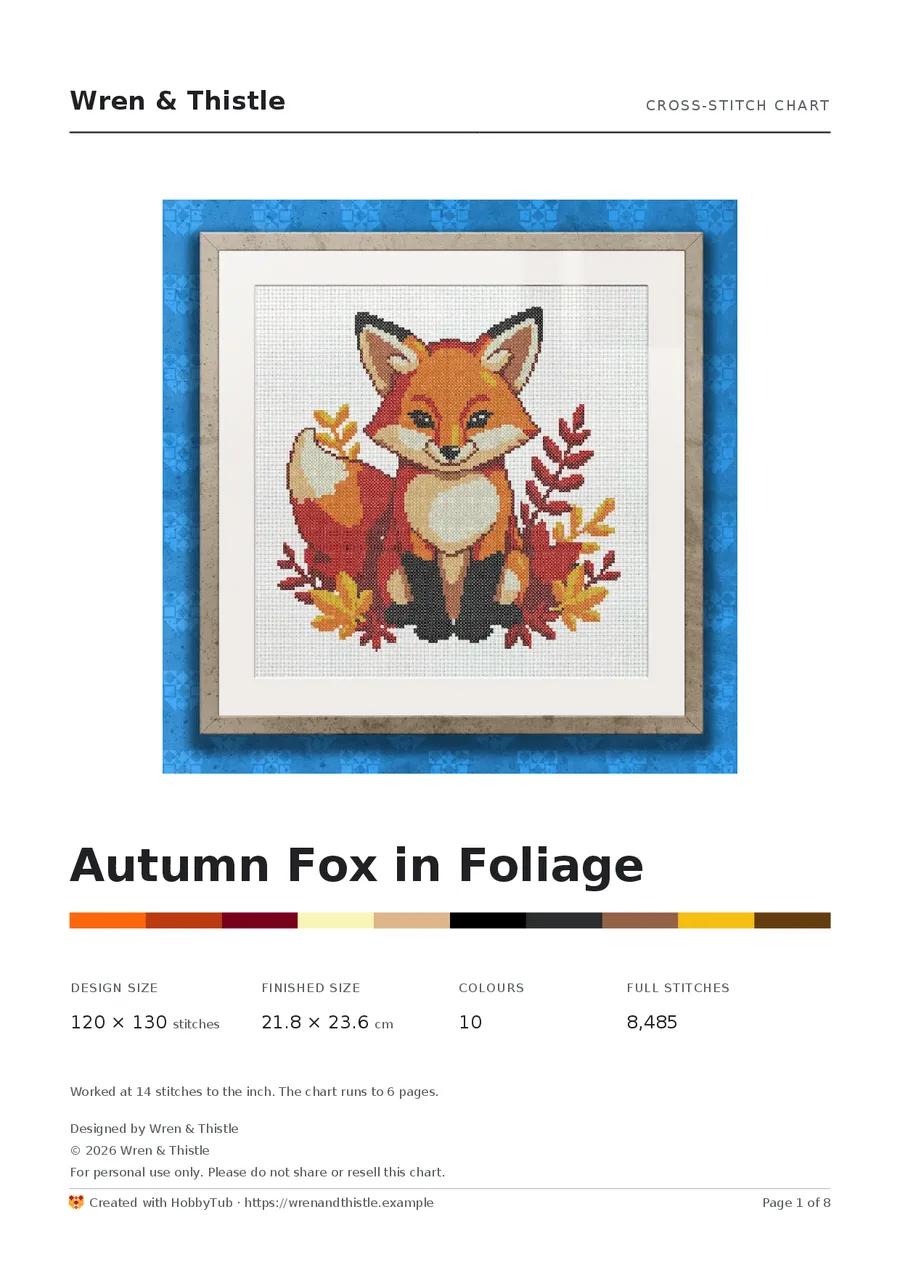
Branding only goes on charts you made. A chart imported from someone else's file keeps its designer's name, and yours is never added to it, which protects the designers you buy from as much as it protects you.
There is more on what goes on the cover in selling cross stitch patterns under your own name.